

Getting you back on your feet.
Bones, joints, muscles, ligaments and tendons. Fractures from the emergency room, joints worn down over years, and the injuries that come from work, sport and a fall at home.
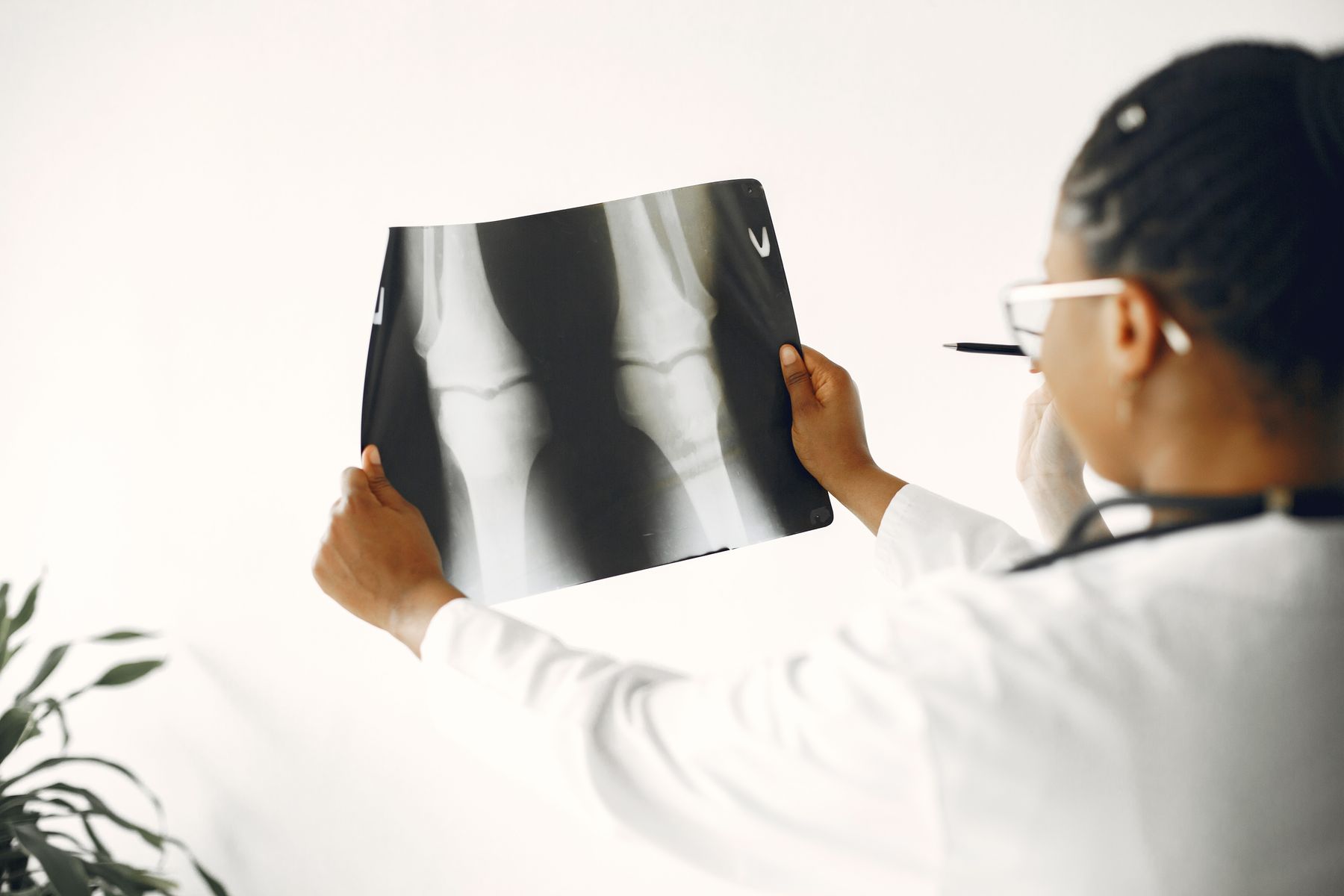

From the injury to walking again
An orthopaedic problem is rarely just the operation. You are examined, imaged, treated or operated on where that helps, and then rehabilitated until the limb does what you need it to do.
Set it properly.
A fracture that heals out of line is far harder to correct later than it is to set correctly now.
X-ray on site means the break is seen before anything is decided, and follow-up films confirm it is healing straight.
Not every break needs an operation. A cast, a splint and time are often the right answer, and you will be told which applies.
What the department treats
Fractures
Broken bones from a fall, a road accident or a crush injury. Reduced, held in place with a cast or fixation, and followed with films until they have healed straight.
Joint pain and arthritis
Knees, hips and shoulders worn down over years. Treated with medication, therapy and injections long before anything is cut.
Sports injuries
Ligament and meniscus tears, sprains that never settled, and shoulders that keep coming out.
Hand and wrist
Carpal tunnel, trigger finger, ganglions and the fractures that get dismissed as a sprain.
Back and neck
Mechanical pain, sciatica and nerve compression, worked up with imaging when it stops settling.
Children
Growth plate injuries in children behave differently to adult breaks and are watched more closely. A child limping without an obvious cause is always worth checking.


Surgery is one option among several
Most orthopaedic problems are treated without an operation. Rest, a cast or brace, medication, an injection and physical therapy resolve a great many of them, and those are tried first where trying them is reasonable.
When an operation is the right answer, your surgeon explains what it involves, how long the recovery realistically takes, and what your hand, knee or hip will be able to do afterwards. Rehabilitation is part of the plan, not an afterthought.
Come to the emergency room if
The limb looks wrong
An obvious deformity, a bone through the skin, or a joint that will not go back into place. Do not try to straighten it yourself.
It is numb, pale or cold
Loss of feeling, pins and needles, a limb that has gone pale or cold, or pain far worse than the injury looks. Circulation and nerves come first.
You cannot bear weight
Unable to stand on it at all after an injury, or a child who refuses to use a limb. Both need a film rather than a wait-and-see.
Before you come in
Orthopaedic problems are physical. The more your surgeon can see and compare, the fewer visits it takes.
Bring every film
X-rays, CT and MRI, including old ones from other hospitals. Comparison over time tells the surgeon more than a single image.
Wear clothing that comes up or off
Shorts for a knee, a loose sleeve for a shoulder. The joint has to be seen and moved, not described.
Know your story
When it started, what you were doing, what makes it worse, and what you have already tried. Dates and details matter.
List your medicines
Everything you take, especially blood thinners and anything for diabetes, and mention any allergy to anaesthetic.
Ready to talk to an orthopedic surgeon?
Bring your films and wear something the joint can be seen through. The desk will arrange the consultation.
Answers before your visit
Do I need a referral?
Bring one if your physician has given you one, along with any films already taken. If you do not have a referral, the front desk will tell you how to arrange a consultation.
Will I need an operation?
Often not. Casts, braces, medication, injections and physical therapy resolve a great many orthopaedic problems. An operation is recommended when it gives a better result than the alternatives, and your surgeon will explain why.
How long does a fracture take to heal?
It depends on which bone, how badly it broke, your age and your general health. A rough guide is six to twelve weeks for many adult fractures, but your surgeon will give you a figure for your specific break rather than an average.
Can I get my cast wet?
No, unless you are told otherwise. A wet plaster cast softens, loses its shape and can damage the skin underneath. Cover it for washing, and come back if it cracks, loosens or starts to smell.
Do I need physical therapy afterwards?
Usually yes. A joint that has been immobilised gets stiff and the muscles around it weaken. Therapy is what turns a healed bone back into a working limb, and skipping it is the most common reason recovery disappoints.
My child is limping but says it does not hurt
Have it looked at. Children are poor at localising pain and their growth plates are injured in ways adult bones are not. A limp without an obvious cause is worth a consultation and usually a film.
When will I get my X-ray result?
Films taken during your visit are usually reviewed the same day so treatment can start. The formal radiologist report follows and goes to the physician who requested it.