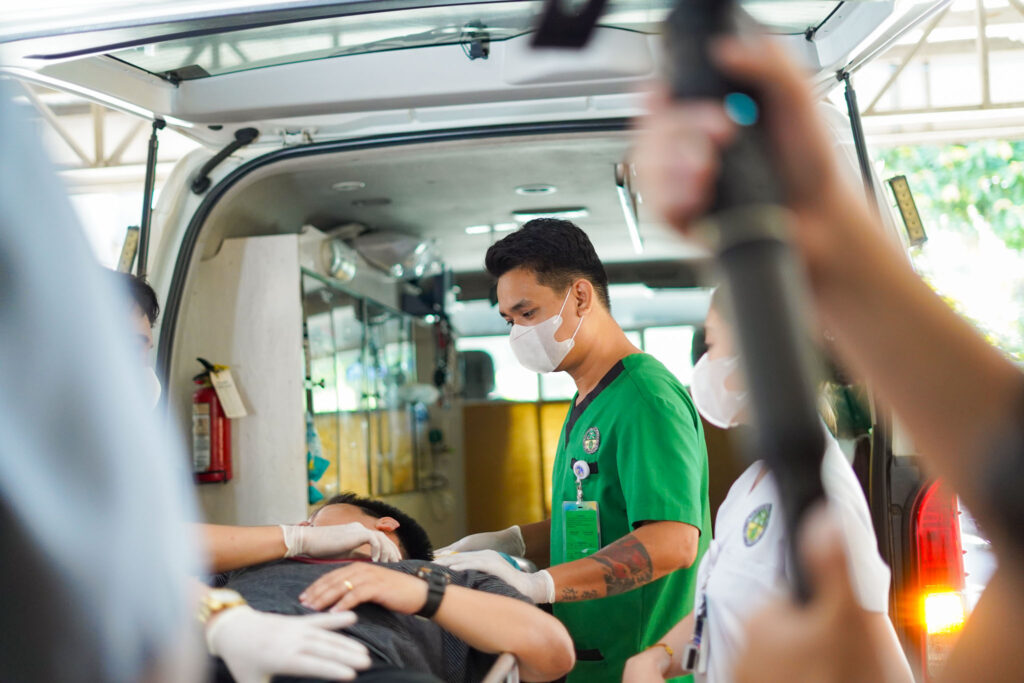
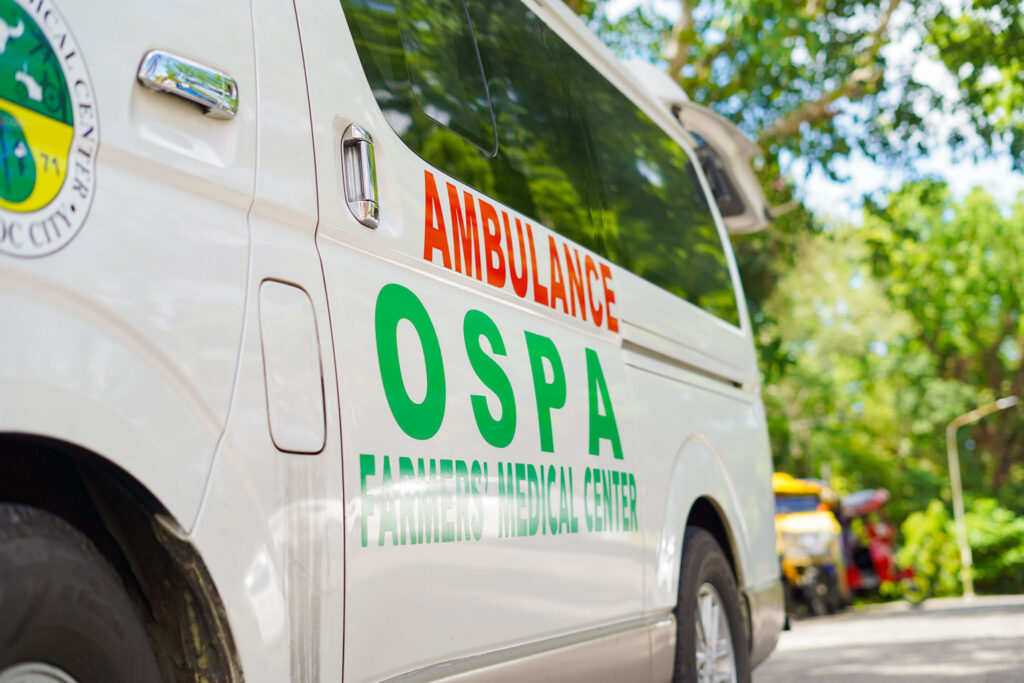
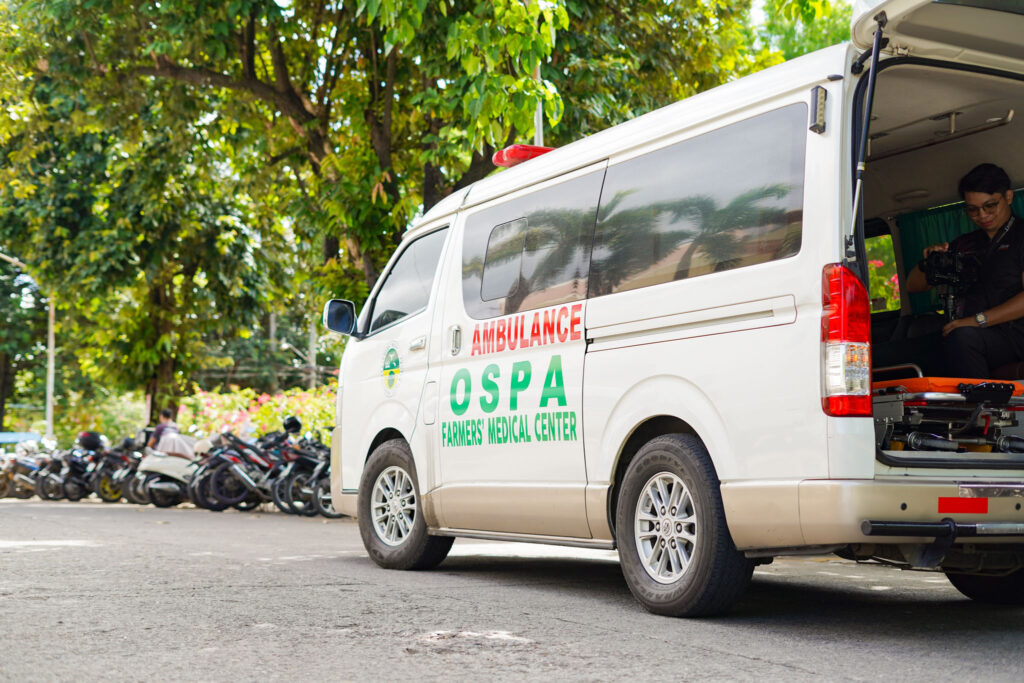
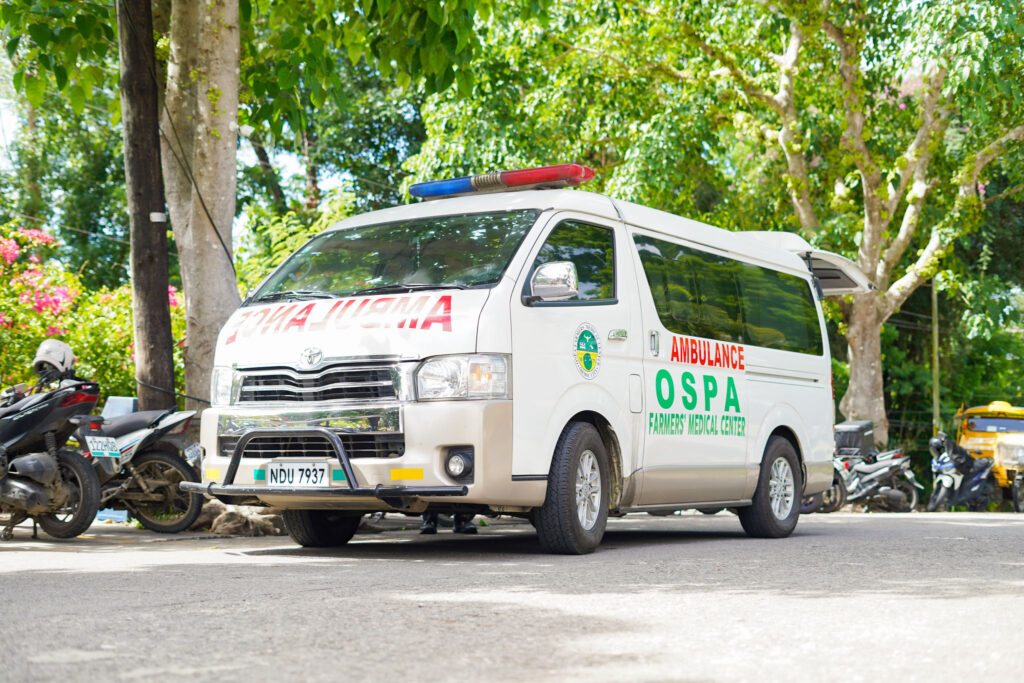
An ambulance is not a taxi with a siren. It is a treatment room that comes to you, staffed by people trained to keep someone stable on the way to the hospital. OSPA’s ambulance service covers emergency response around Ormoc City, transfers between facilities, and transport home for patients who cannot travel by car.
The crew begins treatment at the scene and keeps it going all the way to the emergency room, with the hospital told what is coming before you arrive. That handover is the difference between a journey and a continuation of care.
Someone collapses, falls, is injured or suddenly cannot breathe. The crew comes to where you are, starts treatment there, and brings the patient to the emergency room.
Transfer between hospitals
A patient who needs a service another facility provides is moved with a crew and equipment appropriate to how sick they are, not simply driven across town.
Going home
Some patients are well enough to be discharged but cannot sit up in a car. A stretcher transport home is safer and far less painful than the alternative.
Planned and standby transport
Scheduled trips to appointments or procedures, and cover for events where a large crowd makes an on-site crew sensible. Arrange these in advance where you can.
On the phone
Four things to say, in this order
Stay on the line. The person taking the call may ask you to do something useful while help is on the way.
01
Where you are
A barangay and a landmark beat a street name every time. Say which side of the road, and whether the vehicle can reach the door.
02
What happened
A fall, chest pain, difficulty breathing, a road accident. One plain sentence is enough to decide what is sent.
03
Who the patient is
Age, whether they are awake, whether they are breathing, and anything major already known about their health.
04
A number to call back
So the crew can reach you if they cannot find the place. Keep that phone free and answered.
While you wait
Before the ambulance arrives
Do not move them unless you have to
Especially after a fall or a road accident. If they are in immediate danger where they lie, move them. Otherwise wait.
Nothing to eat or drink
Not even water. It matters if they need surgery or if their swallowing is not safe.
Gather the medicines
The actual boxes if you can, or a photo of them. Bring any PhilHealth or HMO card and a valid ID.
Send someone to the gate
A person waving at the roadside saves more time than any direction given over the phone.
Keep the phone answered
The crew may call back on approach. An unanswered phone costs minutes.
The fleet
What arrives when you call
Need an ambulance now?
Call and say where you are first. OSPA-Farmers’ Medical Center, Barangay Can-adieng, Ormoc City, Leyte.
Ring +63 945 433 1306 or the emergency room on (053) 561-6697. Say where you are first, then what happened. Stay on the line until you are told the call is finished.
Transfers to facilities in other towns and cities are arranged case by case, depending on the patient condition and what is available at the time. Ask when you call rather than assuming either way.
Ambulance charges depend on the distance travelled and the level of crew and equipment required. Ask for the rate when you book a planned transfer. For an emergency, call first and settle the account afterwards.
Usually one companion, seated where the crew directs, wearing a seatbelt. There may be no room at all if the patient needs active treatment on the way. The crew decides at the door.
Yes, for discharges, scheduled transfers and appointments. Call ahead with the date, the pick-up address, the destination and whether the patient can sit or must lie down.
Coverage varies by plan and by whether the trip is an emergency or a scheduled transfer. Bring your card, tell the billing section before the trip where possible, and ask them to check your specific benefit.
If they can sit safely in a car and nothing is likely to change on the way, driving them is reasonable and often faster. Call if they cannot sit, cannot be left alone, or if you are not sure. Not being sure is a good enough reason.