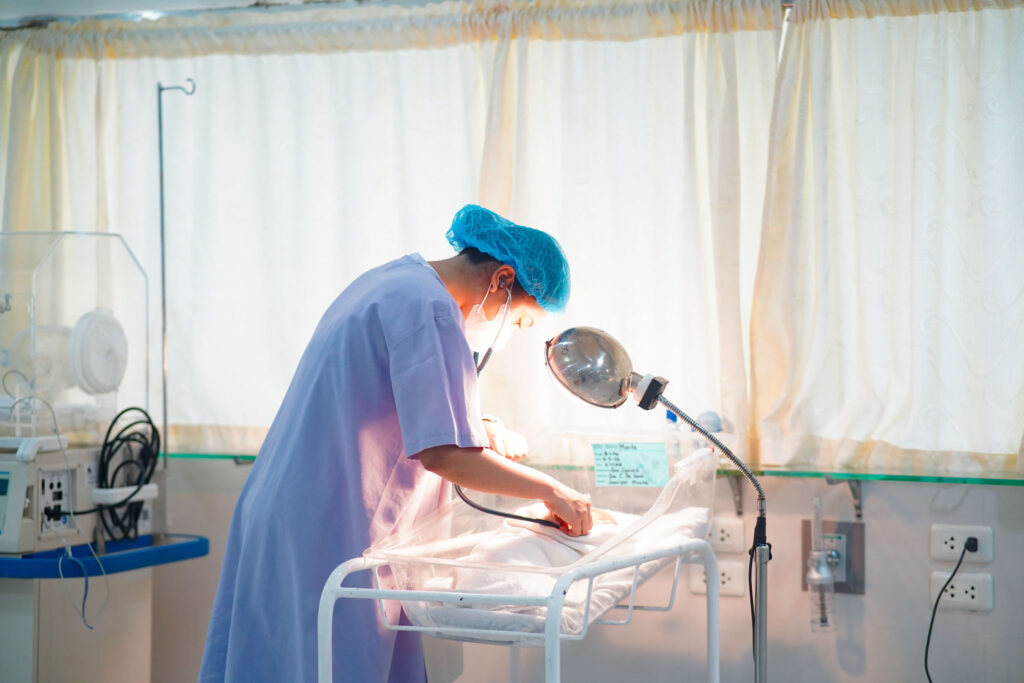
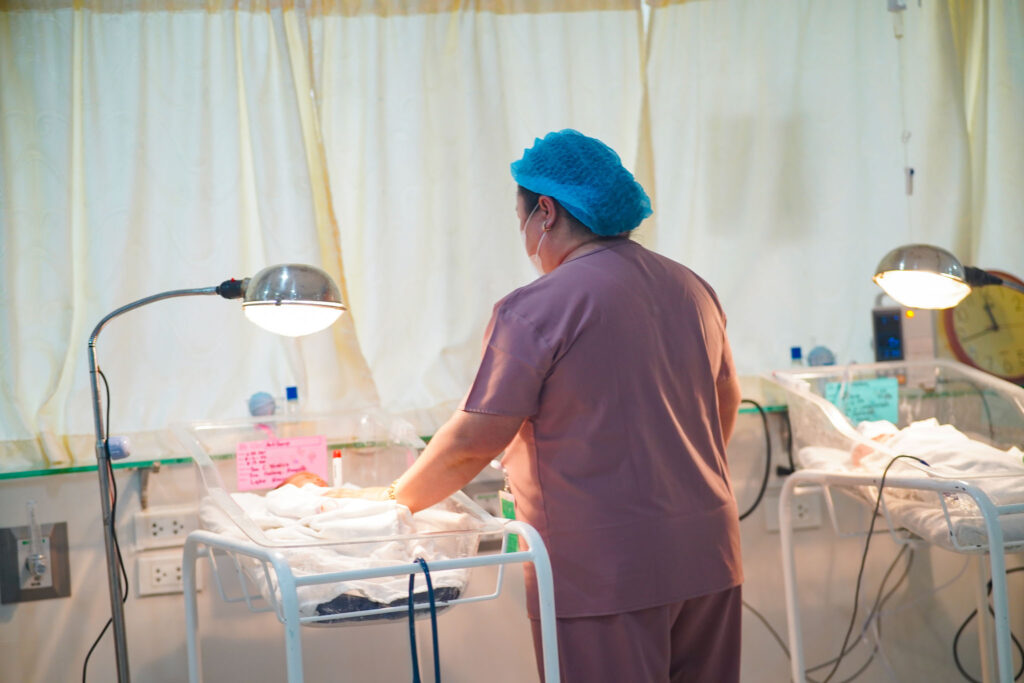
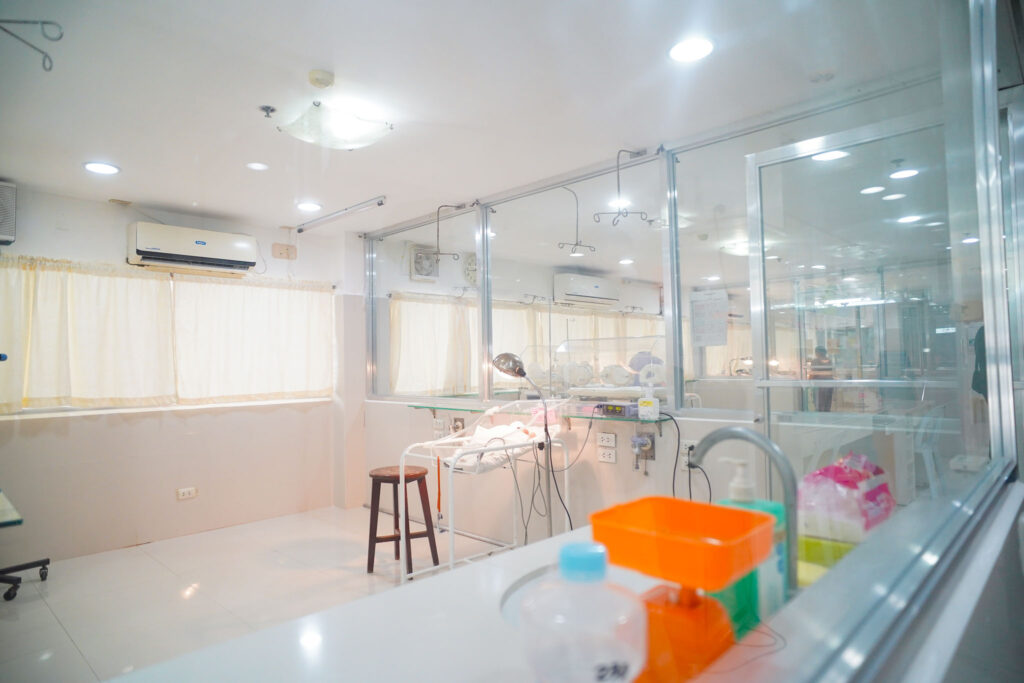
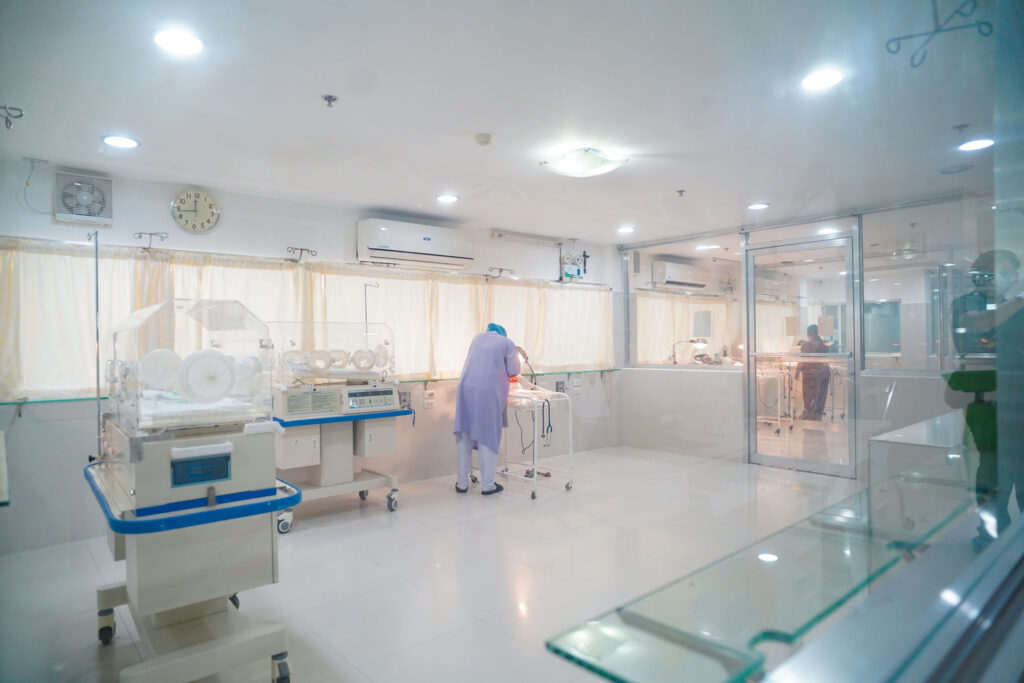
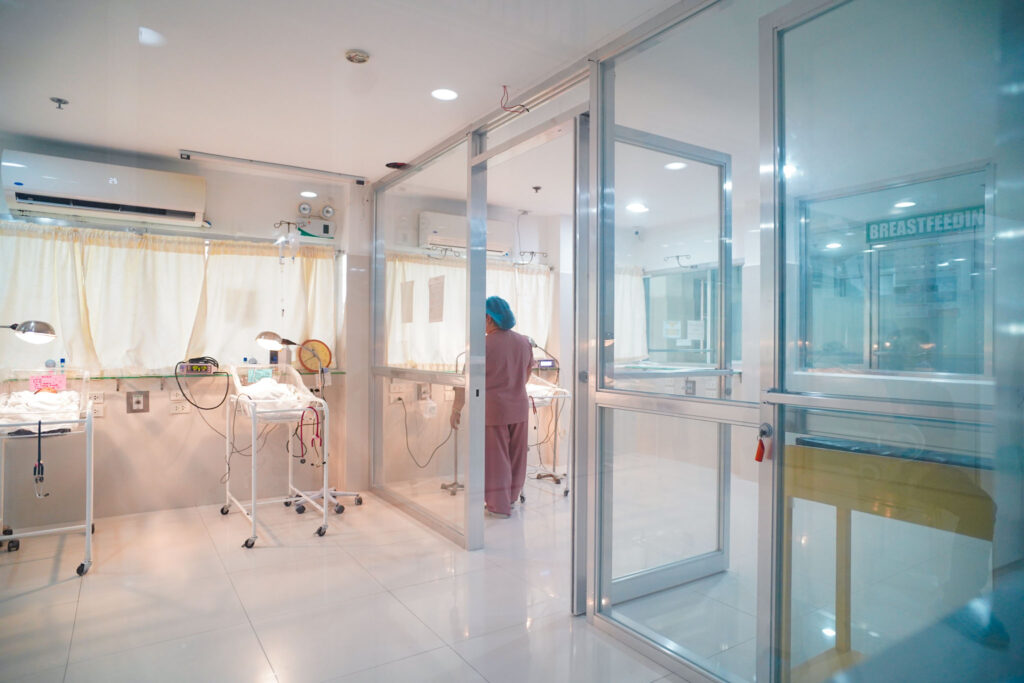
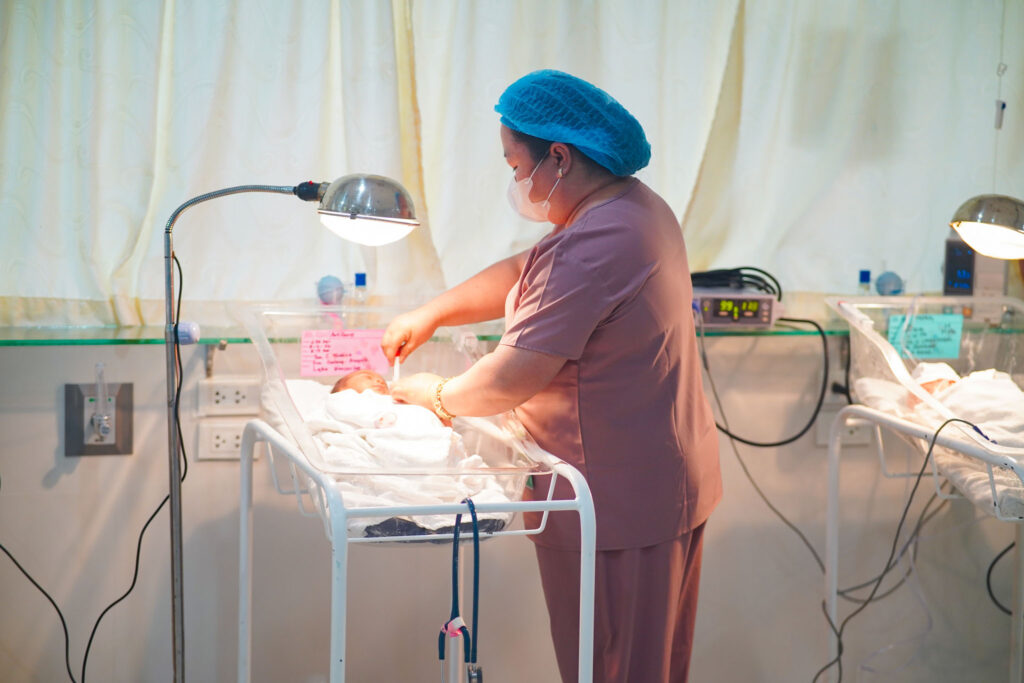
A newborn spends the first days being kept warm, fed and observed. The nursery is where that happens: a room a few steps from the delivery suite where every baby is weighed, examined and watched while parents rest and recover.
This page sets out what happens in there, what the checks are for, and what to ask the nurse on duty.
A newborn loses heat far faster than an adult. Babies are dried, wrapped and kept under a warmer until their temperature holds steady on its own.
The first examination
Weight, length and head circumference are recorded. Heart, lungs, abdomen, hips, cord and reflexes are checked, and anything unexpected is looked at again.
Feeding
Help with the first feed and with latching. Ask early rather than waiting until it hurts, and say so if feeding is not going well.
Watching
Colour, breathing, temperature and feeding are charted through the day. Most of what a nursery does is notice small changes before they become large ones.
Newborn screening
Taken by heel prick, usually after the first day. Ask when your baby’s was done and where the result will be sent, and keep the receipt. More on newborn screening
The record
Birth details and the newborn record go home with you. Keep the book somewhere safe. Every clinic, school and vaccination visit afterwards will ask for it.
Newborn screening
A small blood test that can protect your baby's health
Some rare inherited conditions cannot be seen at birth. A baby can look perfectly well while one is quietly developing. Newborn screening is a simple blood test that looks for them early, and in the Philippines every baby is meant to be offered it.
When it is done
At least 24 hours after birth, and ideally before you take your baby home.
How it is done
A few drops of blood are taken from the heel and dried on a special filter card. It is quick, and your baby can be comforted straight afterwards.
Why it matters
It looks for rare inherited conditions in babies who seem perfectly healthy. Finding one early means treatment can start before any harm is done.
After the test
Ask when the sample was taken and where the result will be sent, and keep the receipt. A positive screen is not a diagnosis. It means more tests, so follow up promptly if you are called back.
Every time, before you touch your baby. It is the single most useful thing a visitor can do.
Ask before you lift
The nurse may be part-way through an observation, or the baby may be under a warmer for a reason.
Say if something looks different
Poor feeding, unusual sleepiness, a change in colour or breathing. You will notice things first.
Ask what is being watched
If your baby stays longer than you expected, ask what is being monitored and what would need to change before going home.
Inside the unit
Where the first days are spent
Contact
Asking about a baby in the nursery
Call the main line and ask for the nursery. If you are calling about a baby already admitted, have the mother’s full name ready, since newborn records are filed under it until the birth is registered.
Once your baby has gone home, the Pediatrics service takes over check-ups, vaccinations and growth.