

See inside, using sound.
Live imaging of the abdomen, pelvis, thyroid, soft tissue and blood flow, and the safe way to follow a pregnancy. No radiation, no injection, nothing to recover from.

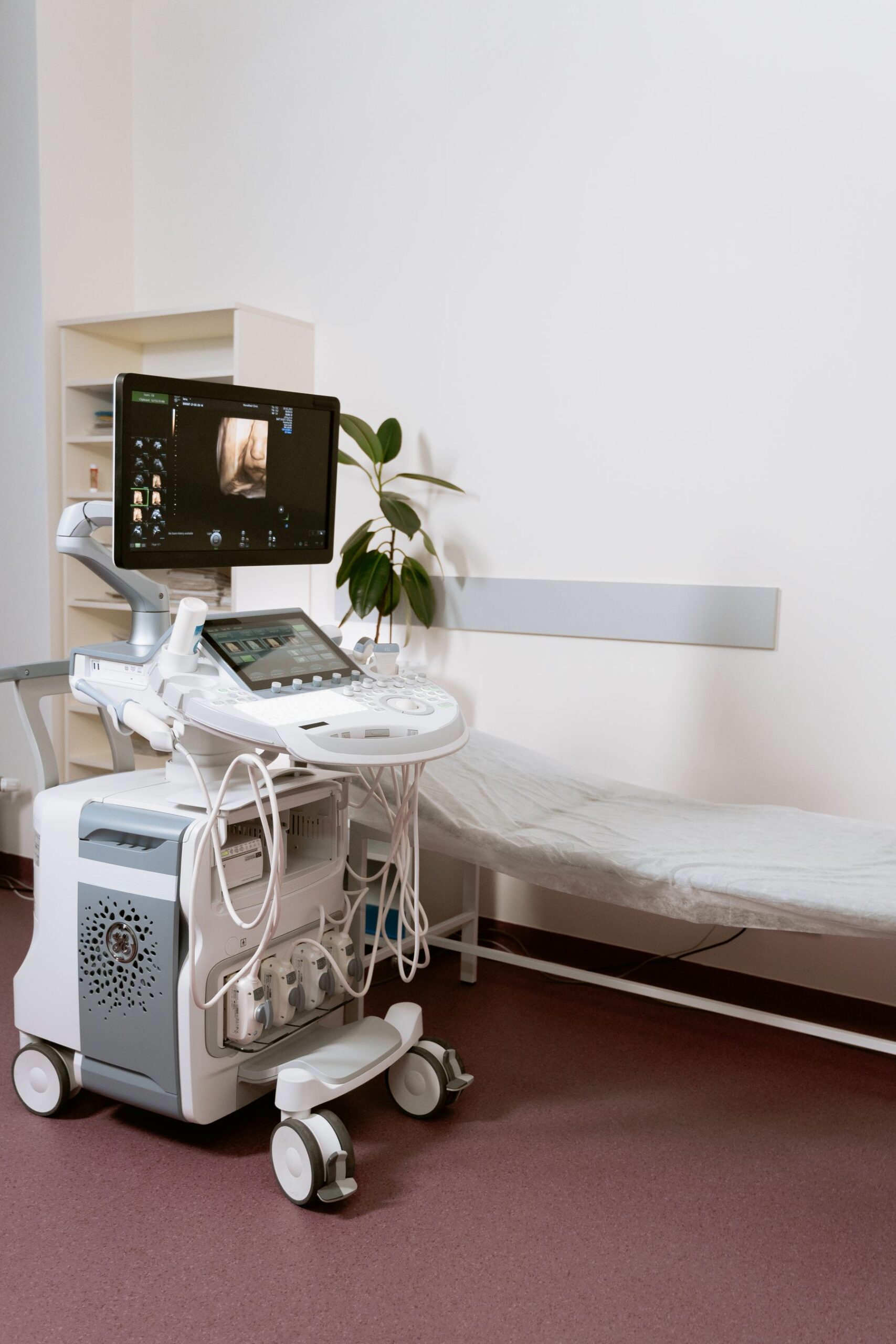
Often the first look, and sometimes the only one needed
No radiation
Sound waves, not X-rays. That is why it is the standard choice in pregnancy and why it can be repeated as often as your doctor needs.
Live, not a snapshot
The sonologist watches organs move and blood flow as it happens, and can re-angle the probe to answer a question the moment it comes up.
Nothing to recover from
No injection, no sedation, no after-effects. You can eat, drive and go back to work straight afterwards.
What we scan
Whole abdomen
Liver, gallbladder and bile ducts, pancreas, spleen and kidneys. The usual first test for upper abdominal pain, jaundice or suspected stones.
Kidneys, ureters and bladder
Stones, obstruction and the state of the bladder wall, with the prostate assessed in men.
Pelvis
Uterus, ovaries and adnexa in women, the prostate and bladder in men. Done through the abdomen, or transvaginally when finer detail is needed.
Thyroid and neck
Nodules, goitre and the neck lymph nodes, with measurements recorded so the next scan can be compared against this one.
Breast and soft tissue
A lump you can feel, a cyst, a swelling or a mass under the skin. Often the second look after a mammogram raises a question.
Doppler studies
Blood flow in the legs, the neck vessels and the vessels feeding an organ, used to look for clots and narrowing.
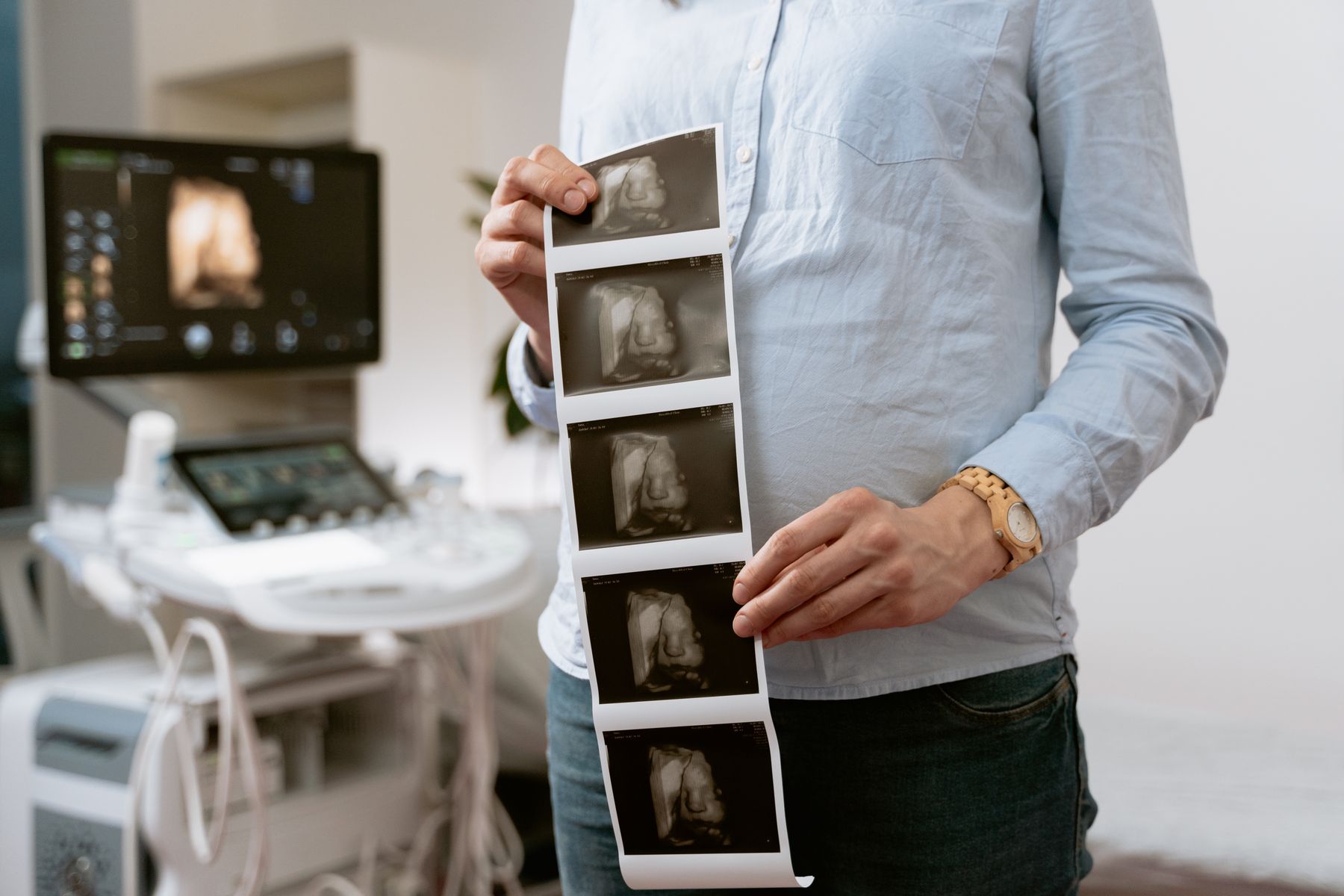
Following a pregnancy, scan by scan
An obstetric ultrasound confirms the pregnancy, dates it, checks the heartbeat, follows growth, and looks at the placenta and the fluid around the baby. What can be seen depends on how far along you are, so when the scan is done matters as much as the scan itself.
Bring your prenatal record. Measurements mean far more when the sonologist can set them beside the ones from your earlier visits.
In the room, and afterwards
You lie on the couch and warm gel goes onto the skin. The probe glides over the area while the sonologist watches the screen, freezing the images that matter and taking measurements as they go.
The study is interpreted and a report is released to the doctor who requested it. Printed images are handed to you where they apply, and they are worth keeping for the next scan.
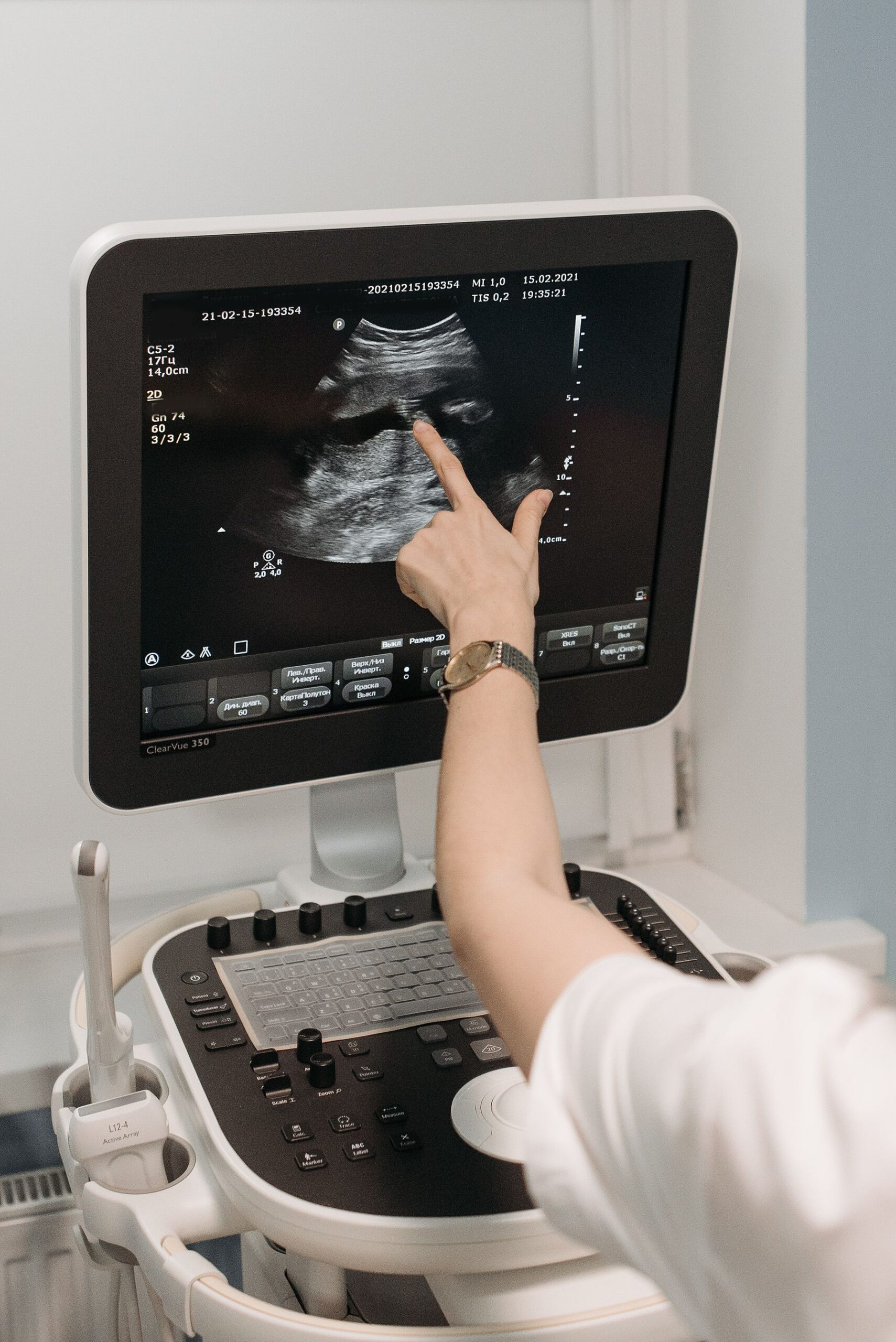

Before you come in
Preparation depends on which study your physician ordered. Confirm it with the imaging desk when you book, and follow what they tell you over anything written here.
Whole abdomen
Fast for six to eight hours. No food, only sips of water. A gallbladder that has been emptied by a meal is very hard to read.
Pelvis through the abdomen
Come with a full bladder. Drink around four glasses of water an hour before your appointment and do not empty it until after the scan.
Thyroid, neck, breast, soft tissue and Doppler
Nothing to do. Eat normally and take your usual medicines.
Whichever study it is
Bring the written request, wear loose clothing that opens at the area being scanned, and bring any prior scans or reports you have.
Ready to book your ultrasound?
Tell the imaging desk which study your physician ordered. They will confirm the preparation and give you a schedule.
Answers before your visit
Does an ultrasound hurt?
No. The gel feels cool for a moment and the probe presses firmly, which can be uncomfortable over a tender area, but the study itself is painless and nothing is inserted through the skin.
Is it safe during pregnancy?
Ultrasound uses sound waves rather than ionising radiation, which is why it is the imaging of choice in pregnancy and can be repeated as often as your doctor needs.
Do I need to fast?
Only for some studies. A whole abdomen scan needs fasting, a pelvic scan through the abdomen needs a full bladder instead, and thyroid, breast and soft tissue studies need no preparation at all. The imaging desk will confirm which applies to you.
How long does it take?
Most studies are finished within half an hour. A Doppler study or a scan covering several areas takes longer, and the desk will tell you what to expect when you book.
Can you tell me the sex of the baby?
Sometimes, depending on how far along the pregnancy is and how the baby is lying. It is not the purpose of the scan and it cannot be promised.
Do I need a request from a doctor?
Bring the written request from your physician. If you do not have one, the front desk will tell you what is needed before the study can be scheduled.
When will I get the result?
The report is released to the physician who requested the study. You can also collect a printed copy at the counter with your official receipt and a valid ID.