

Cross-sections, in seconds.
A rotating X-ray beam turned into detailed slices of bone, soft tissue and blood vessels. Fast enough for an emergency, detailed enough to plan an operation.

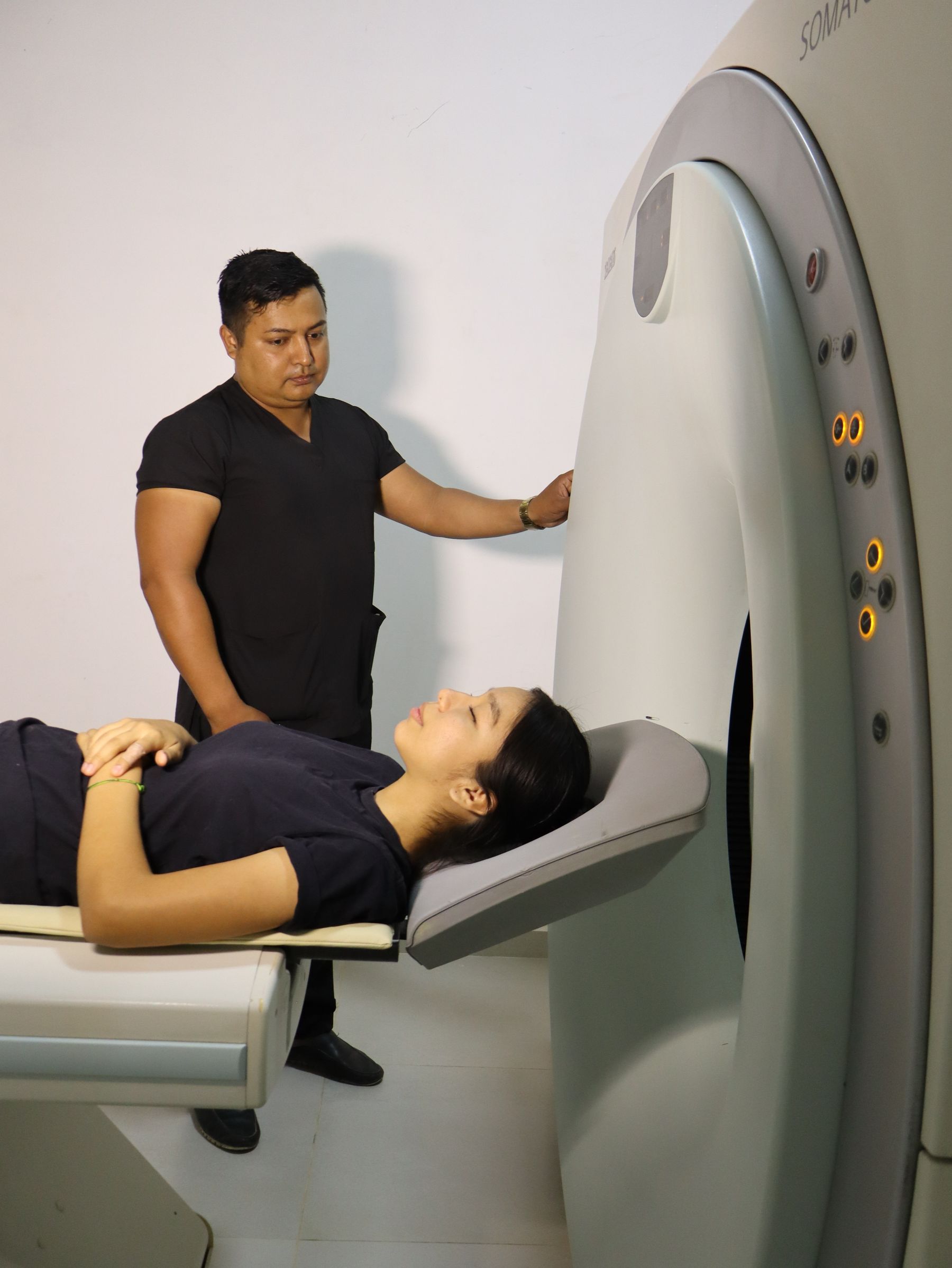
An X-ray that goes all the way around you
A plain X-ray flattens the whole body into a single image, so ribs sit on top of lung and bowel sits on top of bone. A CT sends the beam around you from every angle and a computer reconstructs the result as slices, separating what would otherwise overlap.
Those slices can be stacked into a three-dimensional view when the referring physician needs one, which is why CT is the study of choice before complex surgery.
What a CT is asked to answer
Head and brain
Stroke, head injury, bleeding and a headache that needs an answer quickly rather than eventually.
Chest
Lungs, airways and the space around them. Nodules, infection, fluid and injury after trauma.
Abdomen and pelvis
Appendicitis, obstruction and abscess, and the solid organs once ultrasound has gone as far as it can.
Urinary tract
Stones and obstruction, mapped through the kidneys and ureters, often with no contrast at all.
Bones and joints
Complex fractures and joint injuries, where the detail changes the plan for surgery.
Angiography
Vessels filled with contrast, to look for clots, narrowing and aneurysm.
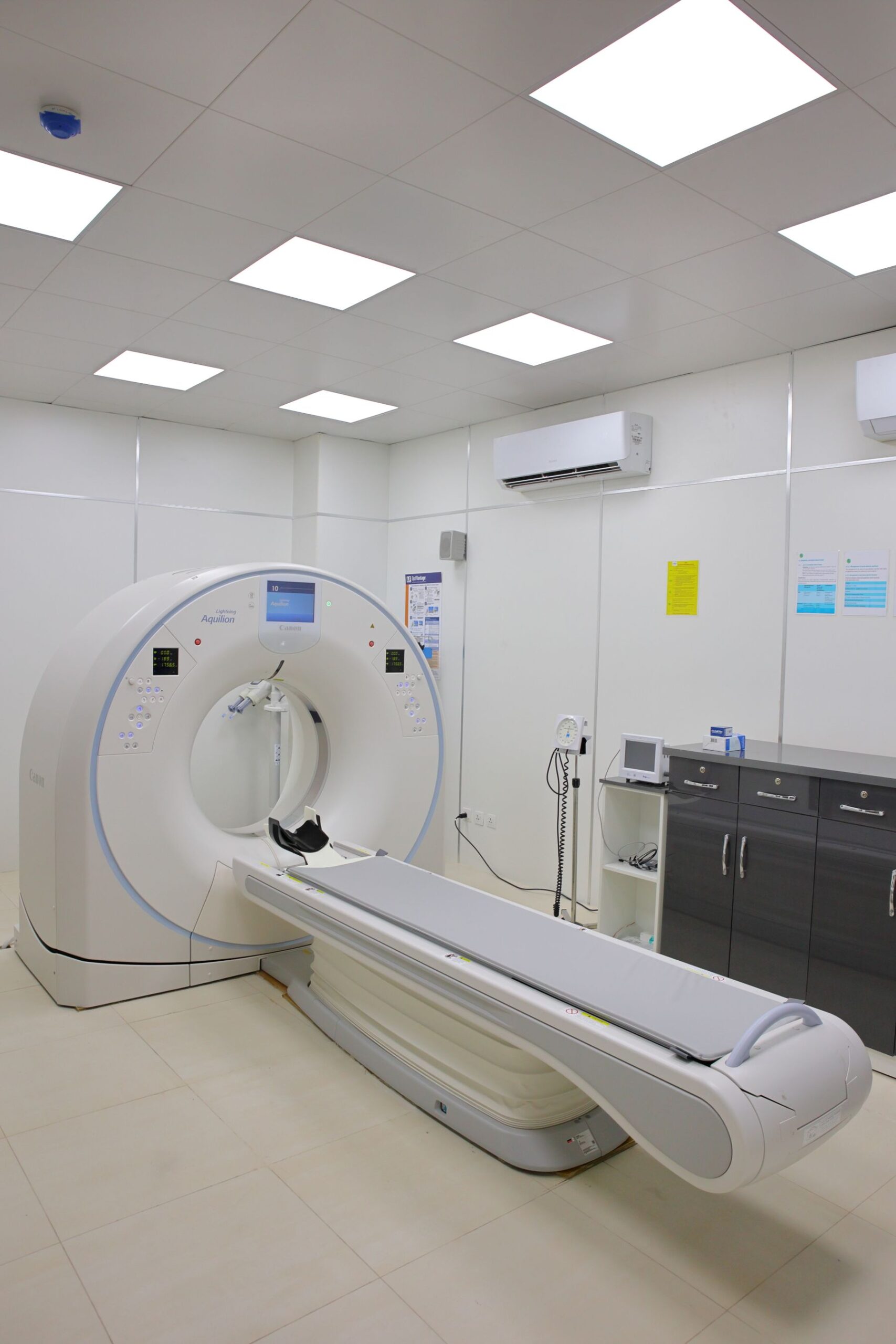

When contrast is used, and when it is not
Contrast is an iodine-based dye given through a vein. It makes vessels, inflammation and many tumours stand out from tissue they would otherwise blend into. A good number of studies need none at all.
Tell the desk before your scan if you have ever reacted to contrast dye or to iodine, if you have kidney disease or diabetes, or if you take metformin. A blood test of kidney function is often requested first.
A warm flush spreading through the body and a metallic taste for a few seconds are normal as the contrast goes in, and they pass.
About the radiation, plainly
It is more than a plain X-ray
A CT delivers a higher dose than a single film. That is the honest trade for the detail it produces, and it is worth knowing before you agree to one.
It is used when it changes the answer
A scan is requested when the result will change what happens next. It is not a routine check to be repeated for reassurance.
The dose is set for the patient
Settings are matched to the body part being studied and to the size of the person on the table, and children are scanned at lower settings than adults.
Before you come in
What you need to do depends on the study and on whether contrast is planned. Confirm it with the imaging desk when you book, and follow what they tell you over anything written here.
If contrast is planned
Fast for four to six hours beforehand. Water and your regular medicines are usually still allowed, but confirm that when you book.
Bring the request and your old films
Prior scans and reports let the radiologist see what has changed rather than guess at it, even if they were done elsewhere.
Tell us about your health
Allergies to contrast or iodine, kidney problems, diabetes, metformin, and any chance that you may be pregnant.
Leave metal at home
Jewellery, hairpins, coins, belts and clothing with zips or studs all show up on the images and can obscure what matters.
Ready to book your CT scan?
Bring your physician’s request to the imaging desk. They will confirm whether contrast is planned, what preparation you need, and when to come in.
Answers before your visit
How long does a CT scan take?
The scan itself takes only minutes. Most of the appointment is preparation, positioning and, when contrast is used, placing the line and waiting the right interval before the images are taken.
Is a CT the same as an MRI?
No. A CT uses X-rays and is quick. An MRI uses a magnetic field, takes far longer and is much noisier. The CT scanner is a short ring rather than a long tunnel, so it is far less enclosed than people expect.
Will I need contrast?
It depends on the question being asked. Some studies need it to show vessels or inflammation, and others read better without it. Your physician’s request will say, and the radiologist can adjust if needed.
Is the radiation dangerous?
A CT uses more radiation than a plain X-ray. It is requested when the information will change your treatment, and the settings are matched to the body part and to the size of the patient. If you are worried, ask the requesting physician what the scan is expected to show.
What if I am pregnant, or might be?
Say so before the scan. Where possible a study without radiation is used instead, and if a CT is genuinely necessary the examination is adjusted to keep the dose as low as it can be.
I am claustrophobic. Will I cope?
Most people do. The CT ring is short and open at both ends, your whole body is not enclosed, and the part of the scan where you must stay still lasts seconds rather than minutes. Tell the technologist beforehand.
Do I need a request from a doctor?
Yes. Bring the written request, and the desk will confirm the preparation and whether your kidney function needs to be checked before contrast is given.
When will I get the result?
The radiologist report is released to the physician who requested the study. You can also collect a printed copy at the counter with your official receipt and a valid ID.