

The first look, in one exposure.
Radiography for chest, bones, abdomen, spine and sinuses. Quick, low dose, and very often the only image your doctor needs to act on.
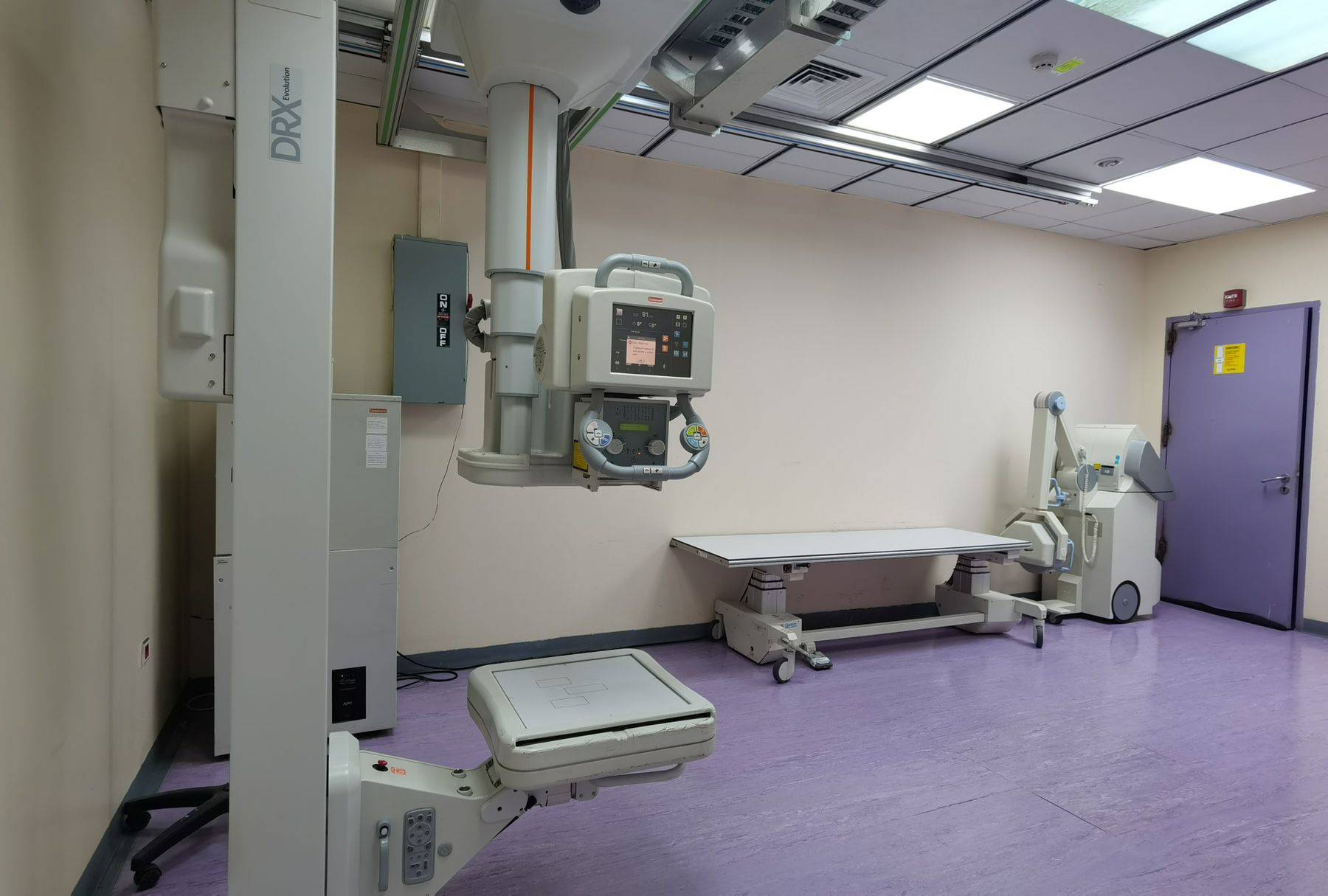

start to finish.
Positioning takes longer than the exposure, which lasts a fraction of a second.
The lowest dose in diagnostic imaging, far below a CT scan.
Often the only image needed before your doctor can act.
What we X-ray
Chest
Pneumonia, tuberculosis, heart size and fluid around the lung, plus clearance before surgery or employment. The most requested film in the department.
Bones and joints
Fractures, dislocations and arthritis, and the follow-up films that confirm a break is healing in line.
Abdomen
Obstruction and perforation, and the gas pattern when the belly is distended and painful.
Skull and sinuses
Sinus disease, facial injury, and the bones of the skull after a blow to the head.
Spine
Alignment, degenerative change and injury, from the neck down to the lower back.
Swallowed objects
Coins, batteries and whatever else a child has swallowed, found and located quickly before it can do harm.
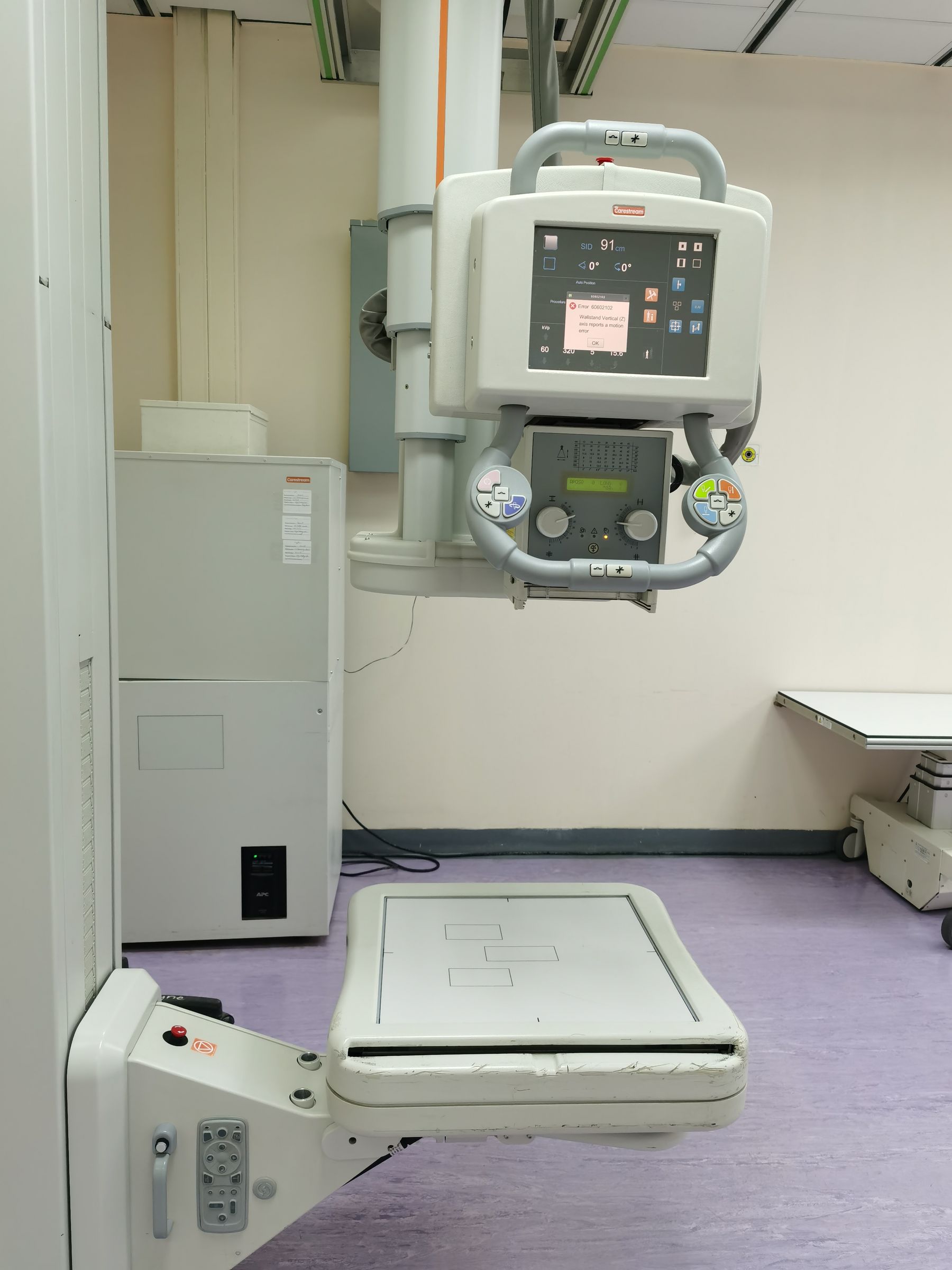
One exposure, then a radiologist
You stand, sit or lie against the detector while the radiologic technologist positions you and steps behind the shield. The exposure lasts a fraction of a second, and you can usually dress and leave straight after.
The images go to a radiologist, who reads them against the question your physician asked and issues a report. Films and reports are yours to keep and bring to the next visit.
It is still radiation, so it is taken when there is a reason to take it.
The dose is small
A chest X-ray is one of the lowest-dose studies in medicine, and a very small fraction of what a CT scan delivers.
Tell us if you may be pregnant
Say so before the exposure, even if you are not certain. The study can be deferred, replaced with ultrasound, or shielded and adjusted.
Children are set differently
Exposure settings are reduced for a child’s size, and a parent can usually stay in the room wearing a lead apron.
Before you come in
Most X-rays need no preparation at all. If your particular study needs something, the imaging desk will tell you when you book.
Bring the request and any old films
A comparison is very often what turns an image into an answer, so bring prior X-rays and reports even if they were taken elsewhere.
Wear something simple
You may be given a gown. Clothing with zips, hooks, studs or metallic prints over the area being imaged will have to come off.
Take off metal
Jewellery, watches, hairpins, coins and glasses near the area being imaged all block the beam and hide what sits underneath.
Tell us before the exposure
If you are pregnant or think you might be, or if you are staying with a child who needs holding still during the study.
Ready to book your X-ray?
Bring your physician’s request to the imaging desk. Chest films for clearance are usually straightforward, and the desk will tell you what to expect.
Answers before your visit

Does an X-ray hurt?
No, you feel nothing at all. The only discomfort is holding a slightly awkward position for a few seconds while the image is taken, and the technologist will help you into it.
How long will it take?
Usually under ten minutes for a straightforward study. Changing and positioning take up nearly all of that, because the exposure itself lasts a fraction of a second.
How much radiation is involved?
A plain X-ray is among the lowest-dose studies in medicine and far below a CT scan. It is still radiation, which is why a study is taken when there is a clinical reason for it rather than as a routine check.
Can I have an X-ray if I am pregnant?
Tell the technologist before the exposure, even if you are only unsure. Depending on what is being looked for, the study may be postponed, replaced with an ultrasound, or shielded and adjusted.
Why do I have to take off jewellery?
Metal blocks the beam completely and leaves a solid white shadow on the image, which can sit directly over the thing your doctor is trying to see.
Can I stay with my child during the X-ray?
Usually yes. You will be given a lead apron and shown where to stand, or how to hold your child steady for the moment the image is taken.
Do I need a request from a doctor?
Bring the written request from your physician. If you are having a chest X-ray for pre-employment or medical clearance, the front desk will tell you what is needed.
When will I get the result?
The radiologist report is released to the physician who requested the study. You can also collect a printed copy at the counter with your official receipt and a valid ID.