

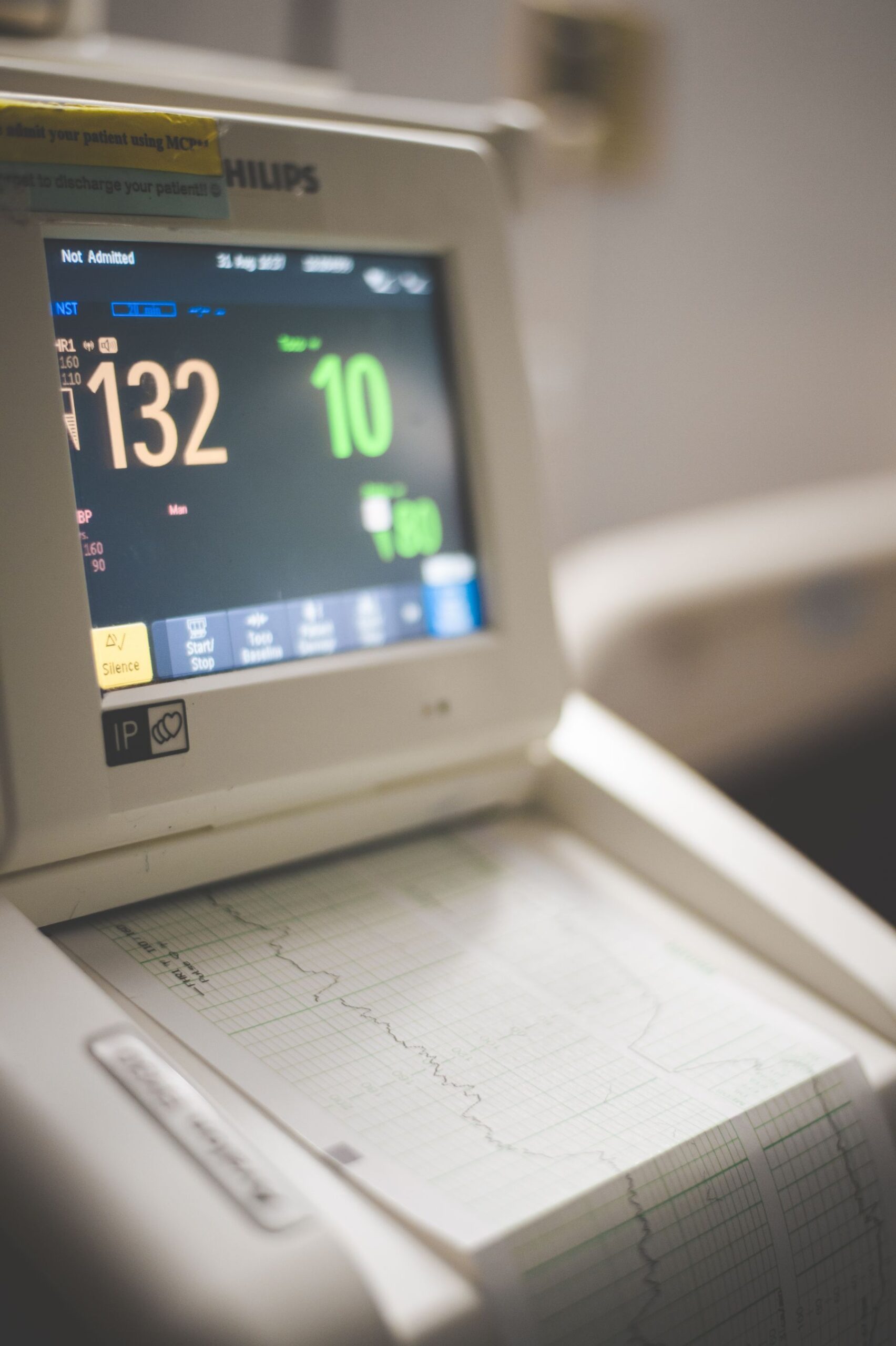
A picture of the heart's electrical activity
An electrocardiogram records the electrical signal that makes your heart beat. Ten electrodes placed on the chest, arms and legs pick it up, and the tracing shows the rhythm, the rate, and whether any part of the heart muscle is under strain or has been damaged.
Painless and non-invasive
Nothing is injected and no current is passed into you. The electrodes only listen. You lie still for a few seconds while the tracing is recorded, and you feel nothing at all.
Done in minutes
The recording itself takes seconds. Most of the appointment is placing the electrodes and settling you so that movement does not disturb the trace.
Read by a physician
The tracing is interpreted by a physician, and the report goes to the doctor who requested it along with a copy of the trace itself.
There is almost nothing to do
An ECG needs no fasting and no special preparation. Come as you are, wear something that opens easily at the chest, and skip heavy lotion or oil on the skin so the electrodes make good contact. Bring a list of the medicines you take, particularly anything for the heart or blood pressure.
From request to reading, in four steps
Request
Bring the written request from your physician. Tell the desk if you have had an ECG before, and bring the previous tracing if you still have it.
Electrodes
Ten small adhesive electrodes are placed on your chest, arms and legs. The skin may be wiped clean, and occasionally a little chest hair is trimmed, so that each one sits flat.
Recording
You lie still and breathe normally for a few seconds while the machine records. Talking or moving blurs the trace, so it is sometimes repeated. Nothing is passed into you.
Reading
A physician interprets the tracing and issues a report to the doctor who requested it, with a copy of the trace attached for comparison later.